 Call: (828) 390-8226


- Morganton Based
Serving Morganton, Valdese, Marion, Lake James, Lake Rhodhiss and the surrounding areas.
- Free Estimates
Three generations of masonry craftsmanship. Call or text (828) 390-8226.
 Morganton Based
 Free Estimates
Outdoor Fireplaces & Fire Pits
An outdoor fireplace, a fire pit or a pizza oven is heavy masonry that stays outside all year. NOAA's 1991-2020 normals for Morganton count 90.8 days a year with a low at or below freezing. On those nights, water that has soaked into a block core or a mortar joint freezes and swells, and the wet soil under a shallow base freezes and lifts it. So we set an outdoor fireplace on a footer below the frost line, and we finish its top with a cap that keeps rain out of the core. We build outdoor stone and brick fireplaces, fire pits, seat walls and pizza ovens on patios and in back yards across Burke County.
How We Build an Outdoor Fireplace
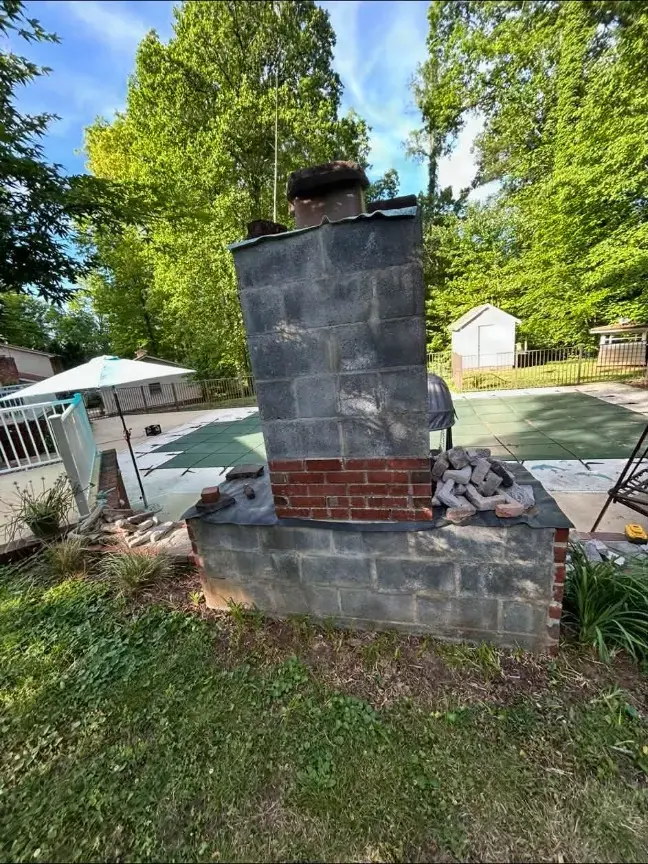
An outdoor fireplace is a small masonry building, and it goes up in the same order every time:
- Mark the lines. NC 811 asks for a call three working days before any digging, so buried lines are marked before the footer is dug.
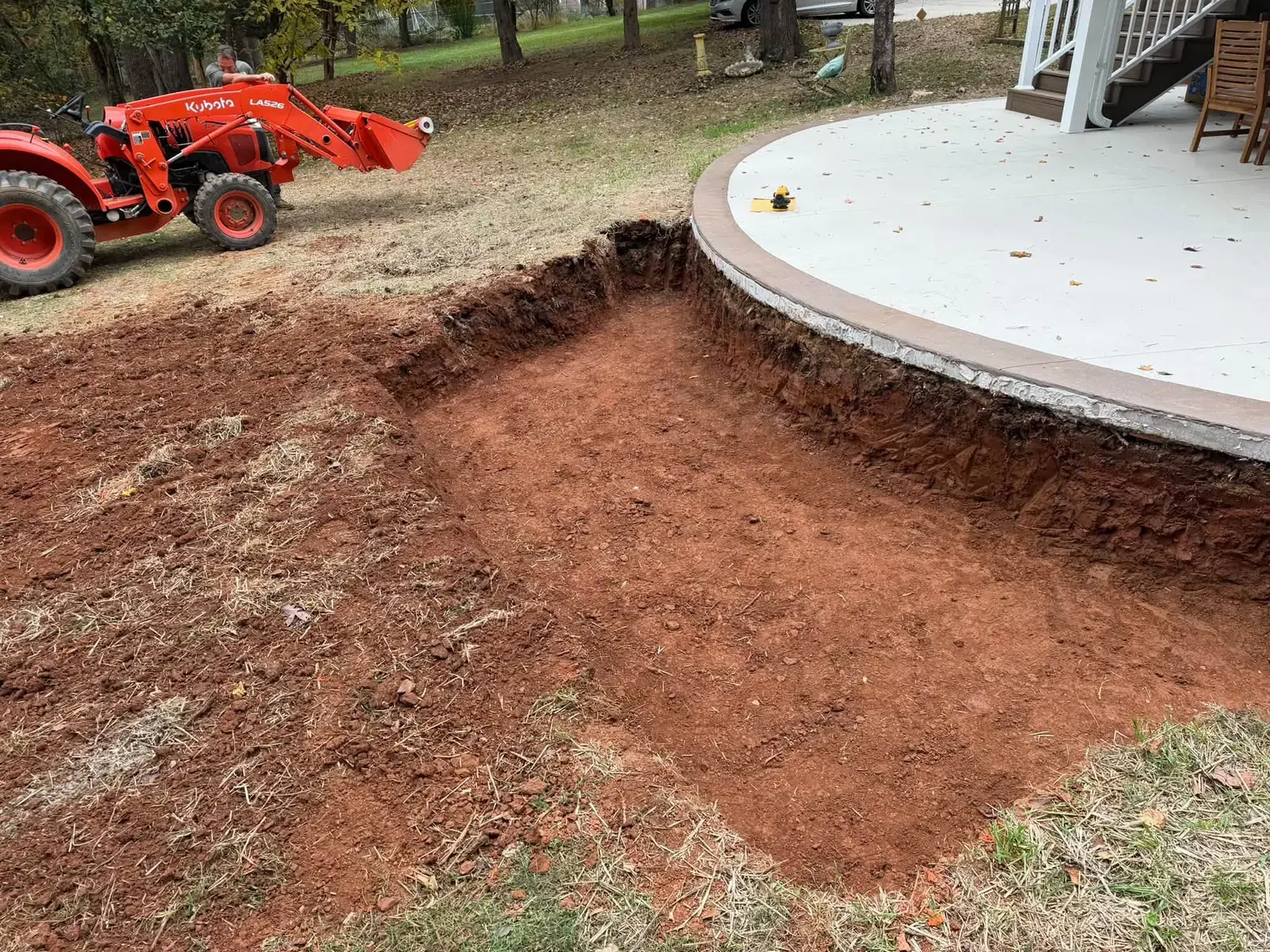
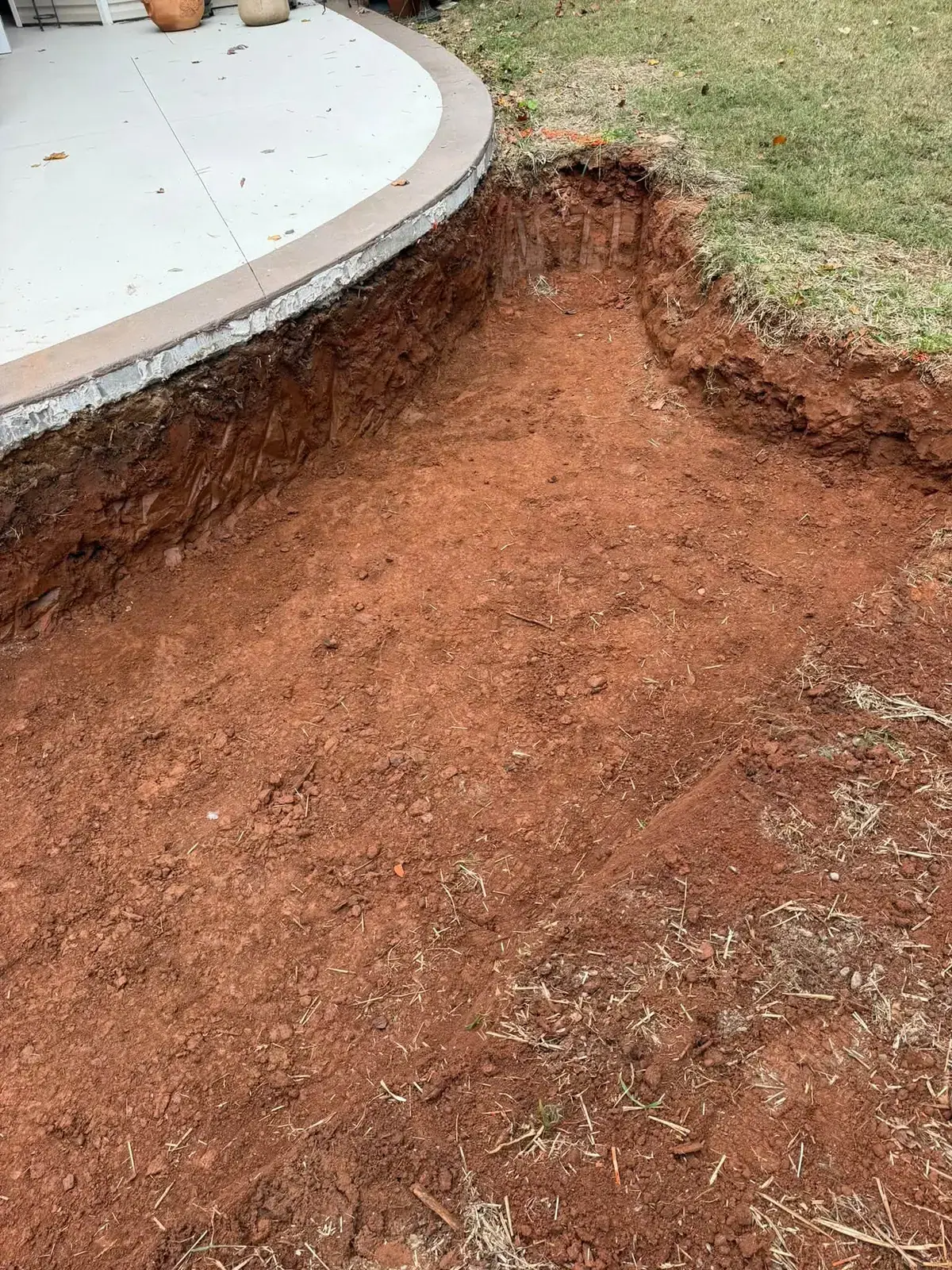
- Footer. The footer is dug below the frost line and poured with rebar in it, wider than the fireplace above it. North Carolina's Residential Code keeps exterior footings below the frost line and never less than 12 inches under finished grade, and the county sets the local depth.
- Block core. The body of the fireplace is laid in concrete block on the footer, with rebar and concrete in the cores where the design calls for them.
- Firebox. The firebox is lined with firebrick set in refractory mortar, which stands up to heat that would crack common brick and mortar.
- Smoke chamber and flue. Above the firebox the masonry narrows into a smoke chamber and a flue that carries the smoke up and out the top.
- Stone or brick face. The face is laid over the block core and tied to it.
- Cap. A stone or concrete cap covers the top and the shoulders, sloped and overhanging with a drip edge, so rain runs off instead of soaking down into the core.
We have an outdoor fireplace and pizza oven underway with its footers dug; our footings page tells how that part of a job goes.
Fire Pits and Seat Walls
A fire pit is a ring of block or stone, lined with firebrick or a fire-rated steel liner so the heat doesn't crack the outer stone. It sits on a compacted gravel base or a concrete pad, with gravel in the bottom of the pit so rainwater drains away instead of standing in it.
A seat wall is a low, freestanding wall built at sitting height, with a flat cap wide enough to sit on. Around a fire pit it gives people a place to sit without carrying chairs out, and on a sloped yard it can double as the edge of the patio. It is built like a small block wall: a footer or a compacted base, block laid level and true, then a stone or brick face and a cap.
How far a fire pit sits from the house, and how far a seat wall sits from the fire, is not a number we set: check your county's fire rules and the fire pit maker's distances. On the patio, we lay the pit out to those numbers first. It goes where people will gather, clear of the house, roof edges, overhanging branches and anything that burns. Then the seat wall is marked around it, with room to walk between the wall and the fire.
Fire Pit Patios on a Sloped Yard
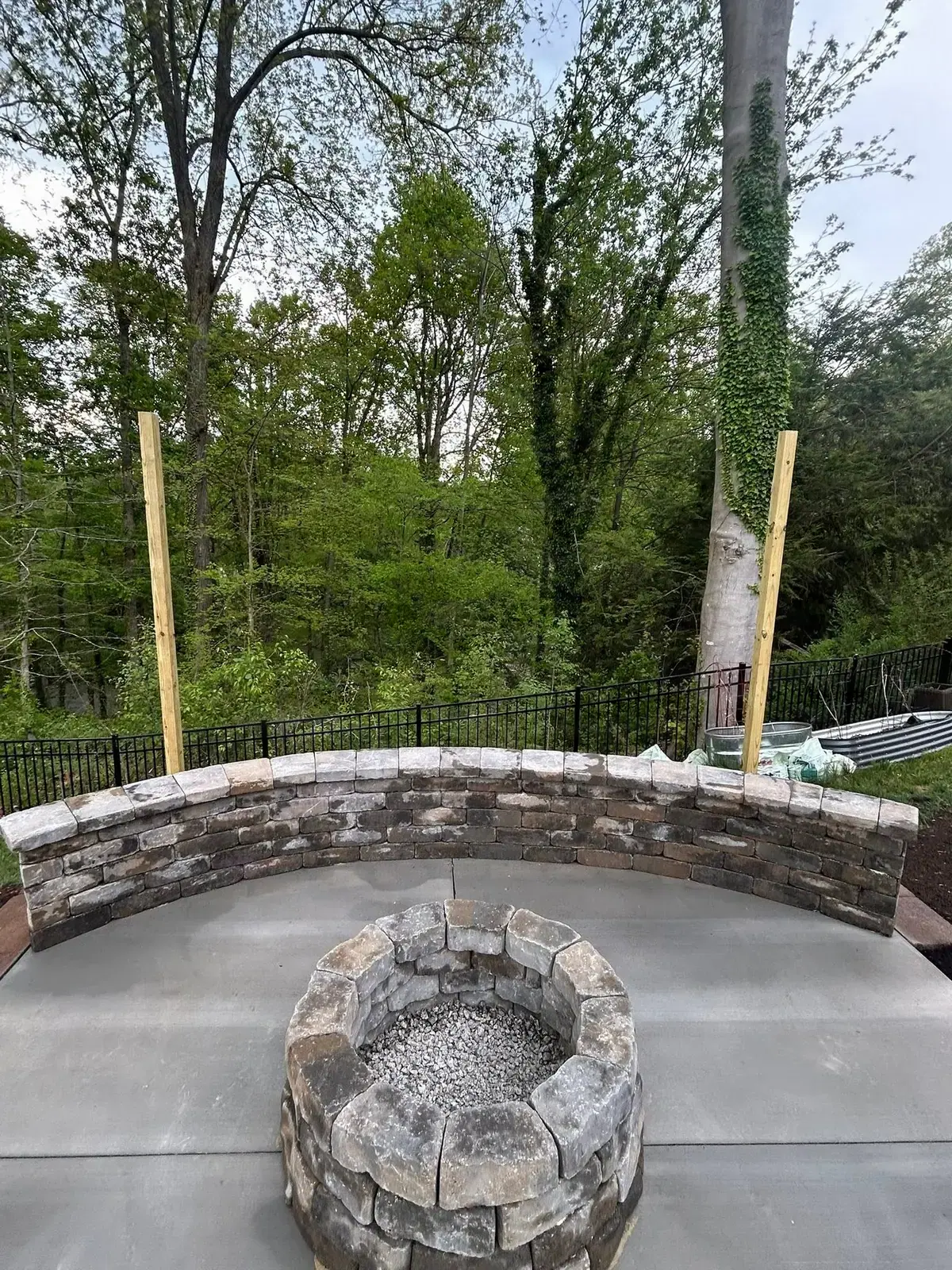
A fire pit needs level ground, and many back yards here have none. On one patio we built an Allan Block retaining wall to level the yard, then poured a 14 by 15 concrete pad on the level ground behind it and laid a fire pit and a seat wall on the pad. A 4 by 4 post went up at each corner to string lights from, and fresh topsoil around the edges tied it into the yard, ready for plants and mulch.
The order matters on a slope. The wall goes in first, with drainage stone behind it so water doesn't build up against the block. The fill behind it is compacted in thin layers, not dumped in one go, so the pad doesn't settle at its downhill edge. Then the pad is formed, poured over a compacted gravel base, and cut with control joints so the cracks that every slab gets fall in straight lines. Our concrete patios and hardscapes page covers pads and patios in more detail.
Pizza Ovens
A masonry pizza oven goes up like an outdoor fireplace from the footer: a footer below the frost line, a block base, and a concrete hearth slab on top of the base. The cooking floor is firebrick laid over a layer of insulation, so the heat stays in the floor instead of soaking down into the slab. The dome or arch above it is firebrick in refractory mortar, wrapped in insulation and finished in stone or brick to match the patio. The flue sits at the front, just outside the oven's mouth, so the smoke rolls out of the door and up.
A pizza oven can be built beside an outdoor fireplace on one footer, with one stone or brick face running across both. The cap matters as much here as on a fireplace: an oven full of wet insulation heats slowly and cracks as the water in it turns to steam.
Stone or Brick, and What Decides the Cost
Stone gives an outdoor fireplace a rough, natural face and suits a yard with stone walls or a stone-faced house. Brick gives it straight lines and matches a brick house. Both are laid over the block core, and both need a cap. What decides the cost of an outdoor fireplace or fire pit:
- Size: the height and width of a fireplace, or the diameter of a fire pit.
- Fireplace, fire pit or both, and whether a pizza oven is part of it.
- Stone or brick for the face and the cap.
- The footer and the pad: how deep and how big, and whether a concrete patio goes in with it.
- Seat walls, how long and how many.
- The yard's slope, and whether a retaining wall has to level it first.
We build outdoor fireplaces and fire pits for back yards in Glen Alpine, Hickory and the towns between them. For stone around a fireplace inside the house, see stone fireplaces. Call or text (828) 390-8226 for a free estimate.
Planning an Outdoor Fireplace or Fire Pit?
Call (828) 390-8226 for a free estimate.
Photos From Our Jobs
Every photo here is from one of our own jobs. Tap one to see it bigger.




Questions We Hear a Lot

-
It depends on the size, stone or brick, the footer and any pad it sits on, whether a pizza oven or seat walls are part of it, and how much the yard slopes. We look at the spot and give you a figure in a free estimate. Call or text (828) 390-8226.
-
Check your county's fire rules and the fire pit maker's distances: they set the number, and we lay the pit out to it. On the patio we keep the pit clear of the house, roof edges, overhanging branches and anything else that burns.
-
A seat wall is a low masonry wall built at sitting height with a flat cap, used as built-in seating around a fire pit or along the edge of a patio. It is laid like a small block wall on a footer or a compacted base, then faced in stone or brick and capped.
-
Far enough that people sit back from the flames and can walk between the wall and the pit. Check the fire pit maker's distances first. We mark the pit and the wall out on the ground before anything is built, so you can see the spacing.
-
Yes. It is heavy, and the ground under it freezes in winter, so it sits on a poured footer below the frost line. The county sets the local frost depth, so check with the county before the work starts.
-
Yes. We offer free estimates. Call (828) 390-8226, send us a message on Facebook or use the contact form.
-
We serve Morganton, NC and the surrounding areas. Recent jobs include Lake James, Lake Rhodhiss, Valdese and Marion. Call (828) 390-8226 to check your location.
-
- Service Area Morganton, NC & surrounding areas:
Valdese, Marion, Lake James & Lake Rhodhiss - Free Estimates Call, text or message usMorganton, NC & nearby
- Find Us Online


