 Call: (828) 390-8226



- Morganton Based
Serving Morganton, Valdese, Marion, Lake James, Lake Rhodhiss and the surrounding areas.
- Free Estimates
Three generations of masonry craftsmanship. Call or text (828) 390-8226.
 Morganton Based
 Free Estimates
Stone Fireplaces
A stone fireplace is the stone face, the hearth and the mantel around a firebox. Most often it is new stone laid over an old brick fireplace; sometimes it is a whole wall of stone from the floor to a vaulted ceiling. Chase Masonry builds them in homes across Burke County and the towns around it. Here a fireplace is often one that gets lit. In Burke County 3.6% of homes heat mainly with wood, and in McDowell County next door 6.5% (US Census ACS 2024 5-year). So the firebox opening, the hearth and the clearances get as much care as the stone face, and we take the time to get the layout and the small details right before a stone is set.
Stone Over an Existing Brick Fireplace
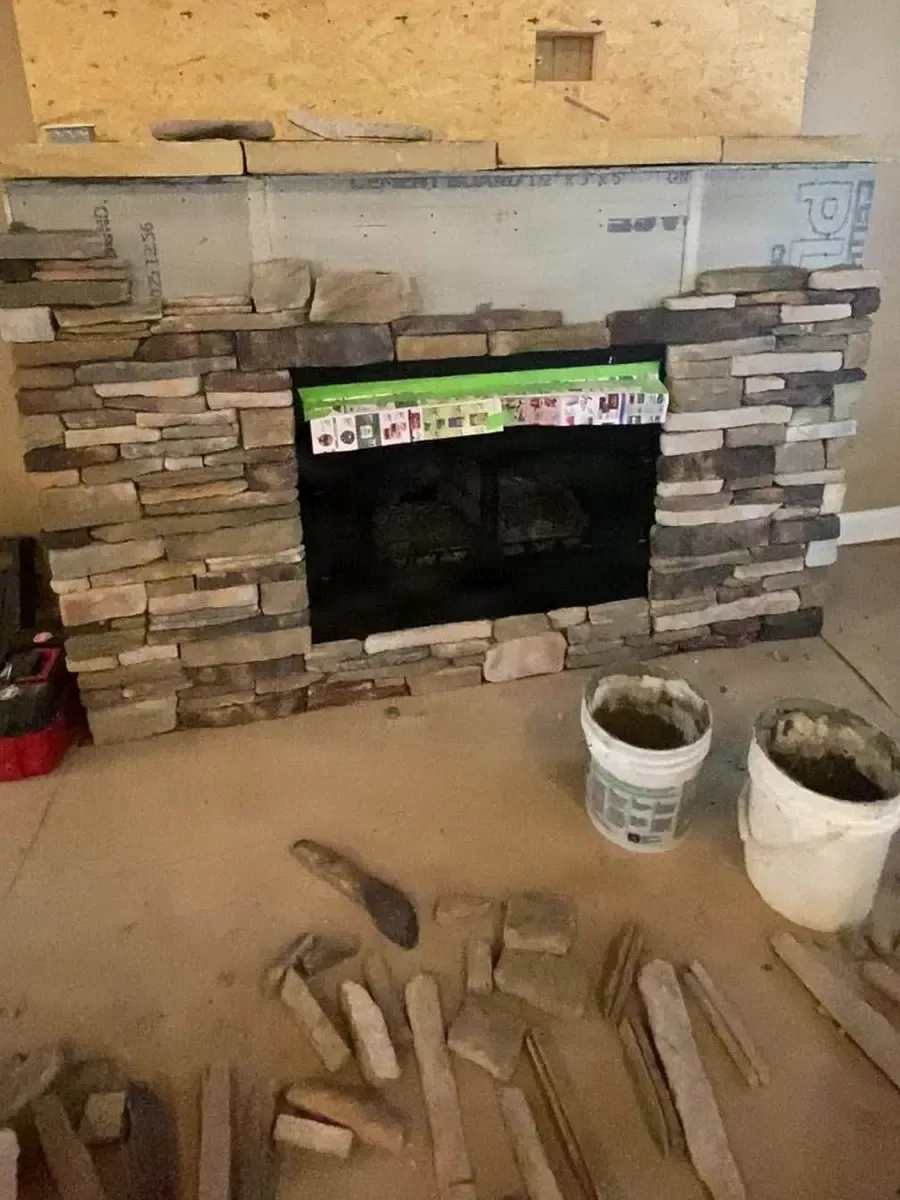
A stone surround is new stone over a brick fireplace that still works but looks its age. Almost half of Burke County's homes, 49.4%, were built before 1980, and an older brick fireplace can be covered instead of torn out. Laying stone over it keeps the firebox and the brick behind it and changes the face. The work starts with the old brick, because new stone is only as steady as the surface under it:
- Check that it is sound. Loose brick, cracked joints and a hearth that has dropped are fixed first. Stone laid over a moving surface cracks along the same line.
- Clean it. Soot, old sealer and paint keep mortar from gripping, so the face is scrubbed or ground back to bare brick. Clean, rough brick takes the stone's mortar directly.
- Lath where it won't come clean. Painted or glazed brick gets metal lath fastened into the masonry and a scratch coat of mortar over it. The scratch coat is combed with grooves while it is wet, which gives the stone a rough face to grab once it sets.
- Cement board on framing. Where the wall around the fireplace is framed, the stone goes on cement board or on lath over the framing, never on drywall, which can't carry the weight.
Floor-to-Ceiling Stone Fireplaces
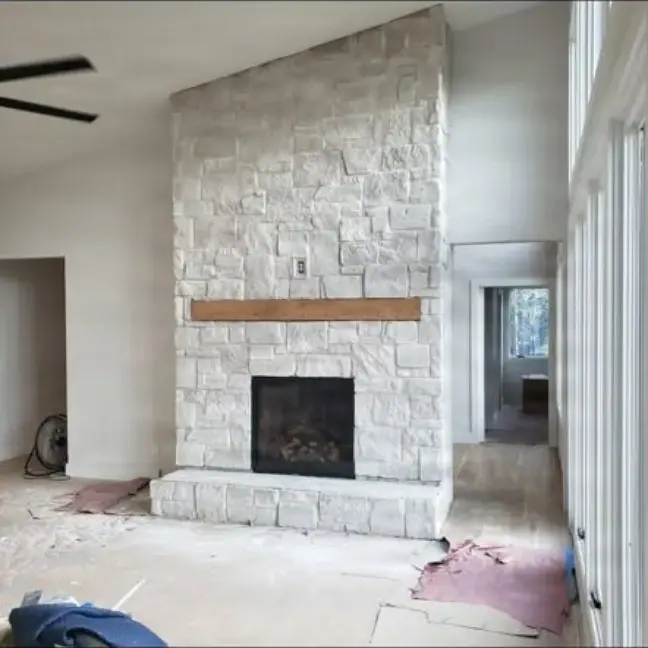
Some fireplaces get stone all the way up. On one we finished, the stonework ran from around the firebox to the top of a vaulted ceiling, and as we said at the time, "a lot of time and attention went into getting the layout and details right". A tall wall shows every choice, so the layout is planned before the first stone goes on:
- Dry layout. The stones are laid out on the floor first, so the big pieces and the colors spread across the whole face instead of bunching in one corner.
- Big stones low and on the corners. Larger pieces go near the bottom and on the outside corners, where they anchor the look; smaller ones fill between them.
- Broken joints. Each stone overlaps the joint below it, so no long vertical line of mortar runs up the wall.
- Working up in lifts. Stone is set from the bottom up, a few courses at a time, so the mortar under each course firms up before the next one bears on it. Above head height that means scaffolding, and on a vaulted ceiling the top courses are cut to the slope of the ceiling.
Hearths, Mantels and Clearances
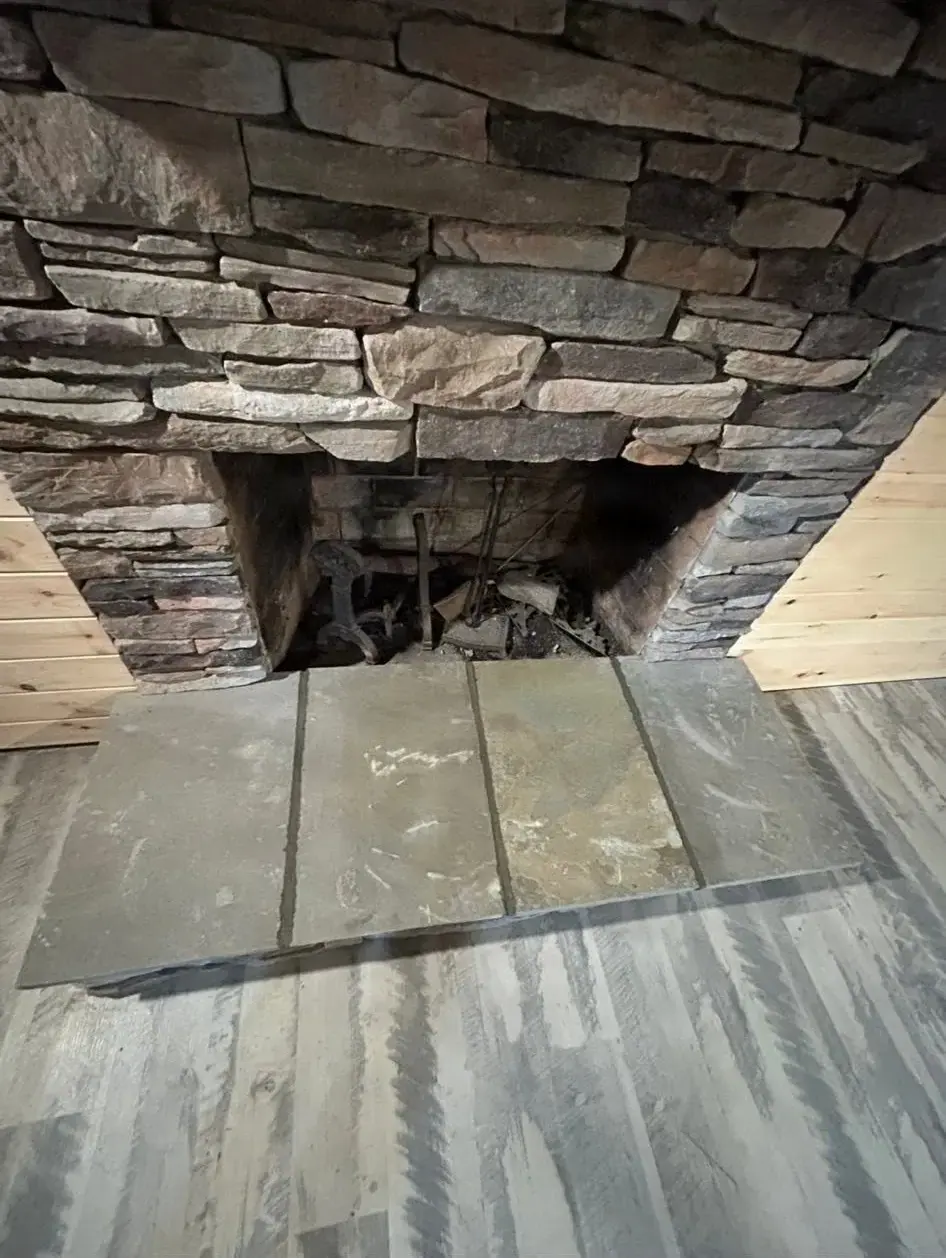
A fireplace that gets used through the winter needs a hearth and a mantel built around the fire, not just around the look.
- Raised or flush hearth. A raised hearth is a ledge of stone or a stone slab at sitting height, built on a solid masonry base. A flush hearth sits level with the floor. Both are non-combustible and reach out in front of the opening to catch sparks and embers.
- The mantel. A wood beam or a stone shelf is set into the stone as the wall goes up, or anchored to the structure behind it, so the mantel and the stone around it read as one piece.
- Clearances. How far wood trim and the mantel sit from the firebox opening, and how far the hearth reaches out, are set by the fireplace or insert maker's instructions and by the building code. We lay the stone out to those numbers before any of it is set.
Both gas inserts and wood-burning fireplaces take a stone face. An insert comes with its maker's manual, which sets the distances for its trim and mantel. A wood fire throws sparks and embers onto the hearth, so with wood heat the hearth's reach in front of the opening matters most.
Cultured Stone or Natural Stone on a Fireplace
Both go on fireplaces, and the choice changes the weight, the look and the cost:
- Cultured stone is cast from concrete and colored to look like stone. It is light, comes with matching corner pieces and has a flat back, so it is set in mortar over lath or cement board. It suits a framed wall or a tall face that can't carry much weight.
- Natural thin stone is real stone sawn to a thin slice. Its color runs all the way through, so a chipped edge shows the same stone. It weighs more than cultured stone but still goes on as an adhered veneer.
- Full-thickness stone is the heaviest. It can't hang on a wall: it needs its own footing or a ledge to sit on, so it is usually planned when the house or the fireplace is first built.
Stacked stone, the long, thin pieces laid tight with little or no mortar showing, comes in both cultured and natural stone. Our stone veneer page goes through the materials, and how they go on outside walls, in more detail.
What Decides the Cost of a Stone Fireplace
A stone fireplace is priced from the wall you have and the one you want. What decides the cost:
- Height and width of the stone face, and whether it stops at the mantel or runs to the ceiling.
- Natural or cultured stone, and a stacked or a grouted look.
- Over brick or over framing. Clean brick takes stone directly; painted brick or a framed wall needs lath and a scratch coat, or cement board, first.
- The hearth and the mantel: raised or flush, a slab or built-up stone, and the mantel itself.
- A vaulted ceiling, which means scaffolding and stone cut to the slope.
We build stone fireplaces in Morganton, Valdese and the towns around them. For a fireplace or a fire pit on a patio, see outdoor fireplaces and fire pits. Send photos of your fireplace through the contact form, or call or text (828) 390-8226 for a free estimate.
Thinking About a Stone Fireplace?
Call (828) 390-8226 for a free estimate.
Photos From Our Jobs
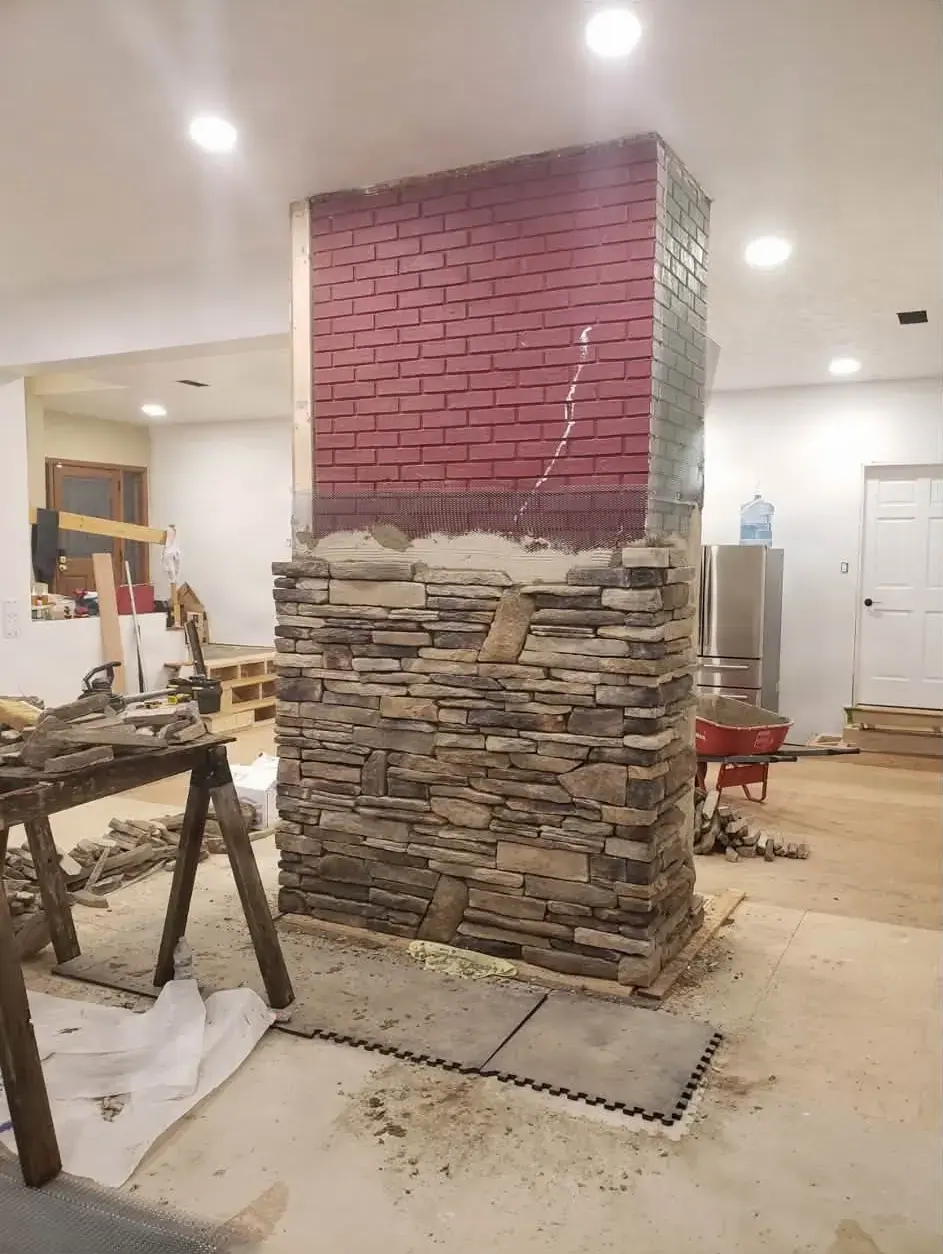
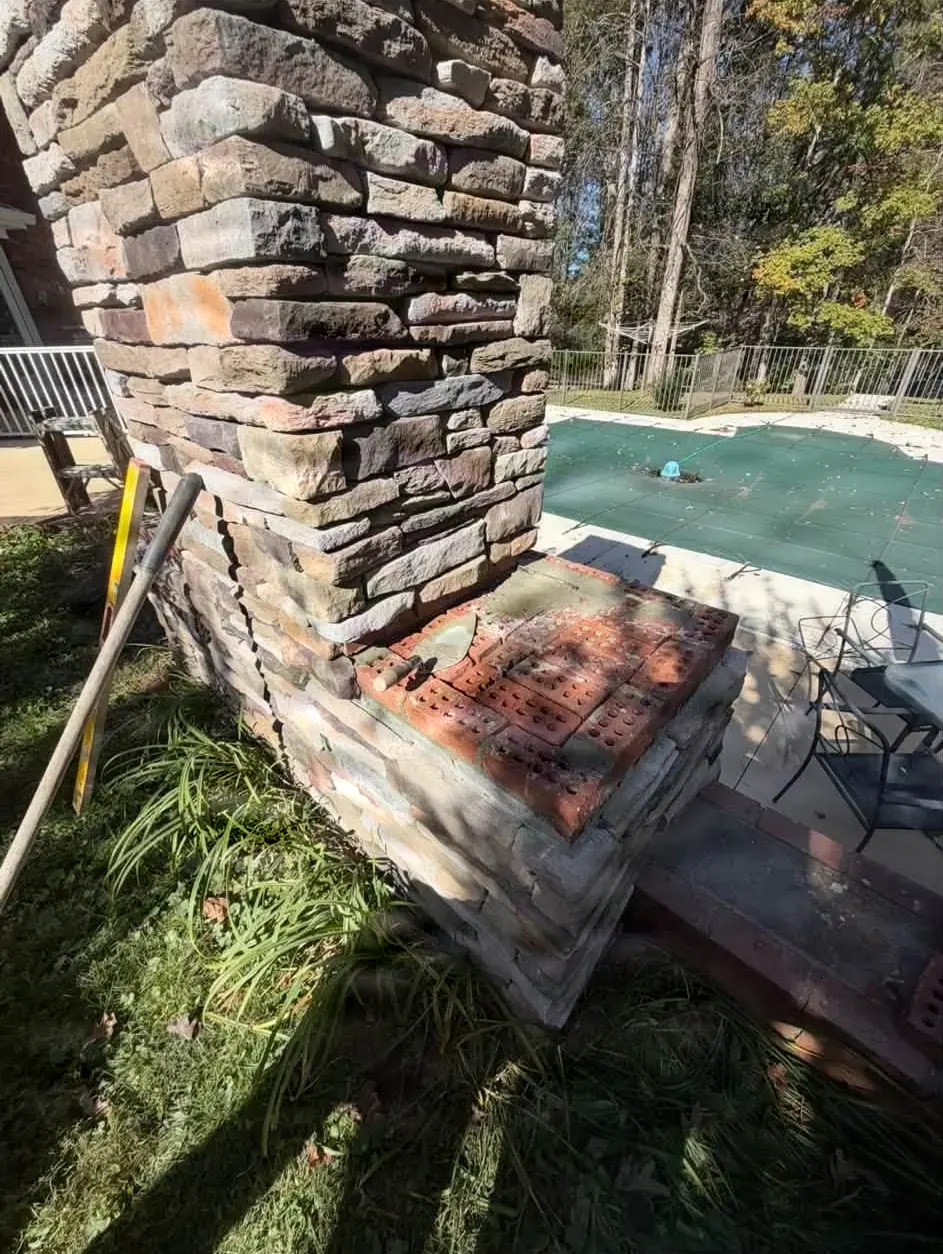
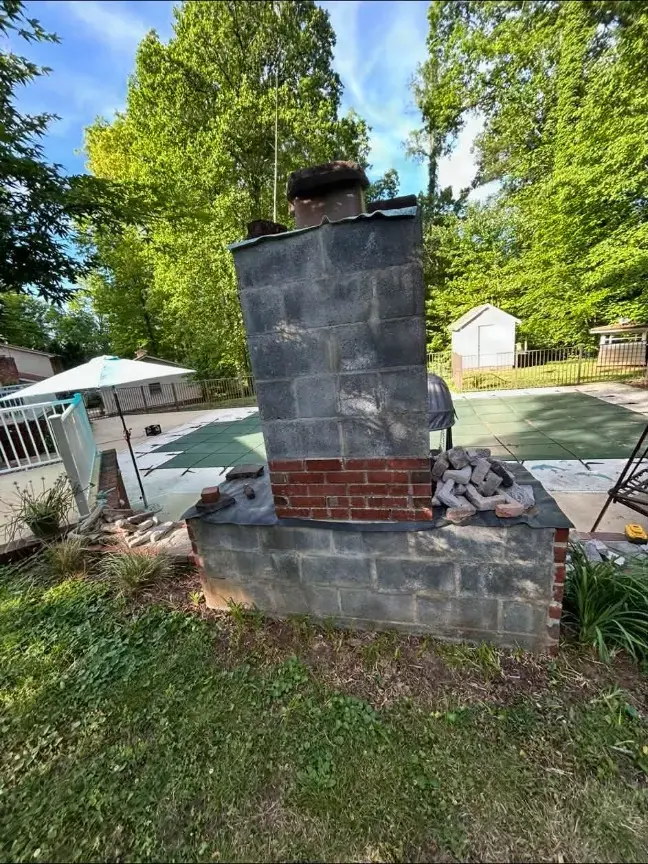
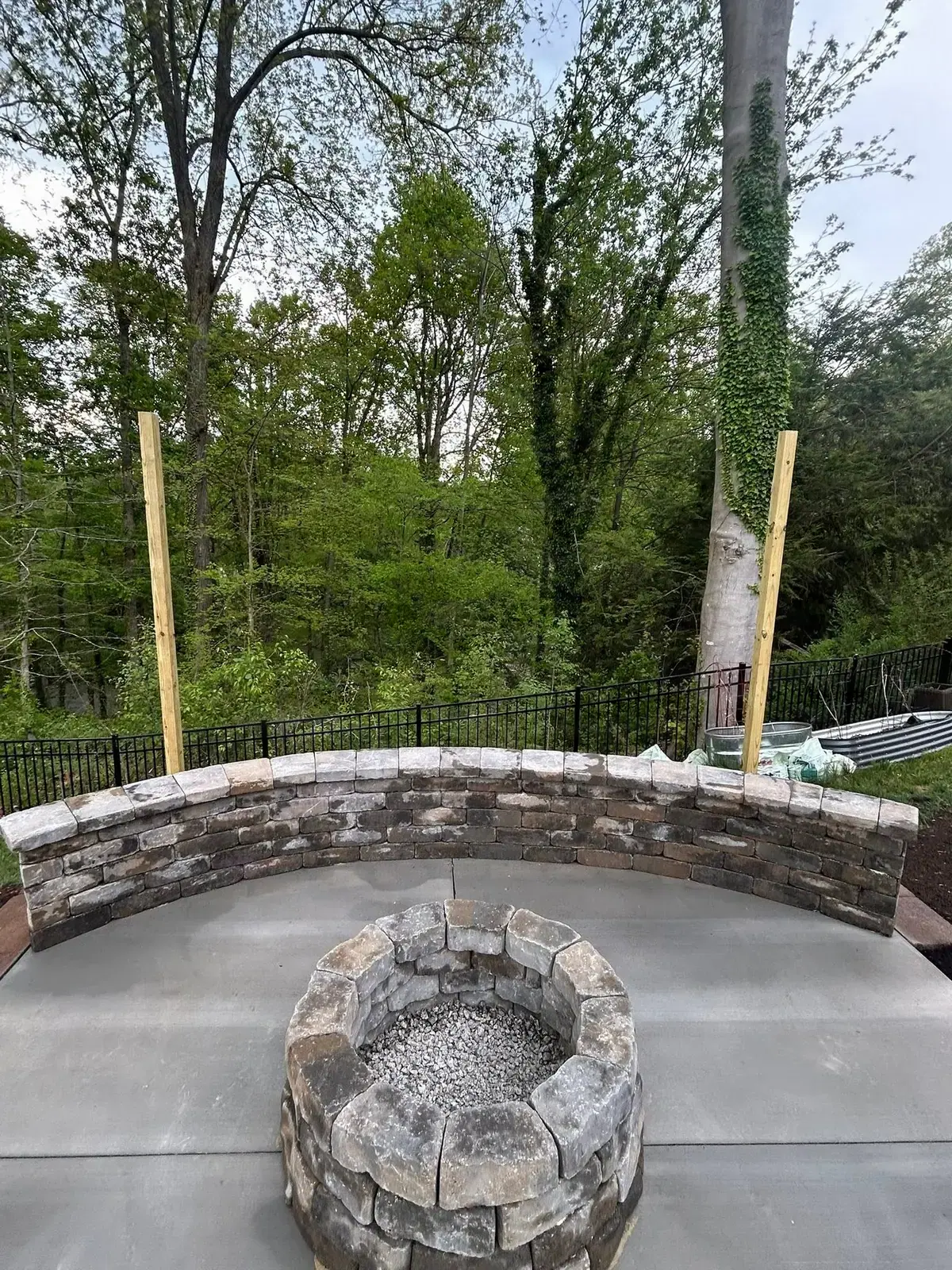
Every photo here is from one of our own jobs. Tap one to see it bigger.




Questions We Hear a Lot

-
Yes. The brick is checked for loose pieces and cracked joints, then cleaned to bare brick, or fitted with metal lath and a scratch coat if it is painted. The stone is set in mortar over it, and the firebox and the brick behind it stay as they are.
-
It depends on the fireplace: the height and width of the stone, natural or cultured stone, whether it goes over brick or over framing, the hearth and the mantel, and whether a vaulted ceiling means scaffolding. We look at the wall and give you a figure in a free estimate. Call or text (828) 390-8226.
-
It depends on the stone. Cultured stone is the lightest and is set in mortar over lath or cement board on the wall. Natural thin stone is heavier but still adhered to the wall, while full-thickness stone needs its own footing or ledge to sit on. That weight is one reason most stone added to an existing fireplace is thin veneer.
-
Stacked stone is long, thin pieces laid tight in courses, with little or no mortar showing, for a layered look. A grouted stone fireplace shows mortar joints between the stones instead. Both come in natural and cultured stone.
-
Yes: raised hearths at sitting height and flush hearths level with the floor, in a stone slab or built-up stone. The hearth is non-combustible and reaches out in front of the firebox opening as far as the fireplace maker and the code call for.
-
Yes. We offer free estimates. Call (828) 390-8226, send us a message on Facebook or use the contact form.
-
We serve Morganton, NC and the surrounding areas. Recent jobs include Lake James, Lake Rhodhiss, Valdese and Marion. Call (828) 390-8226 to check your location.
-
- Service Area Morganton, NC & surrounding areas:
Valdese, Marion, Lake James & Lake Rhodhiss - Free Estimates Call, text or message usMorganton, NC & nearby
- Find Us Online


