 Call: (828) 390-8226


- Morganton Based
Serving Morganton, Valdese, Marion, Lake James, Lake Rhodhiss and the surrounding areas.
- Free Estimates
Three generations of masonry craftsmanship. Call or text (828) 390-8226.
 Morganton Based
 Free Estimates
Concrete Patios & Hardscapes
We pour concrete patios, pads, porches and steps in Morganton and around Burke County, and build the hardscape that goes with them: seat walls, low walls and stone steps. A slab looks like the simplest job in the yard, but whether it stays flat, sheds water and cracks only where it should is settled before the truck arrives: in the grade, the gravel base and the joints.
Concrete Patios, Pads and Porches in Morganton
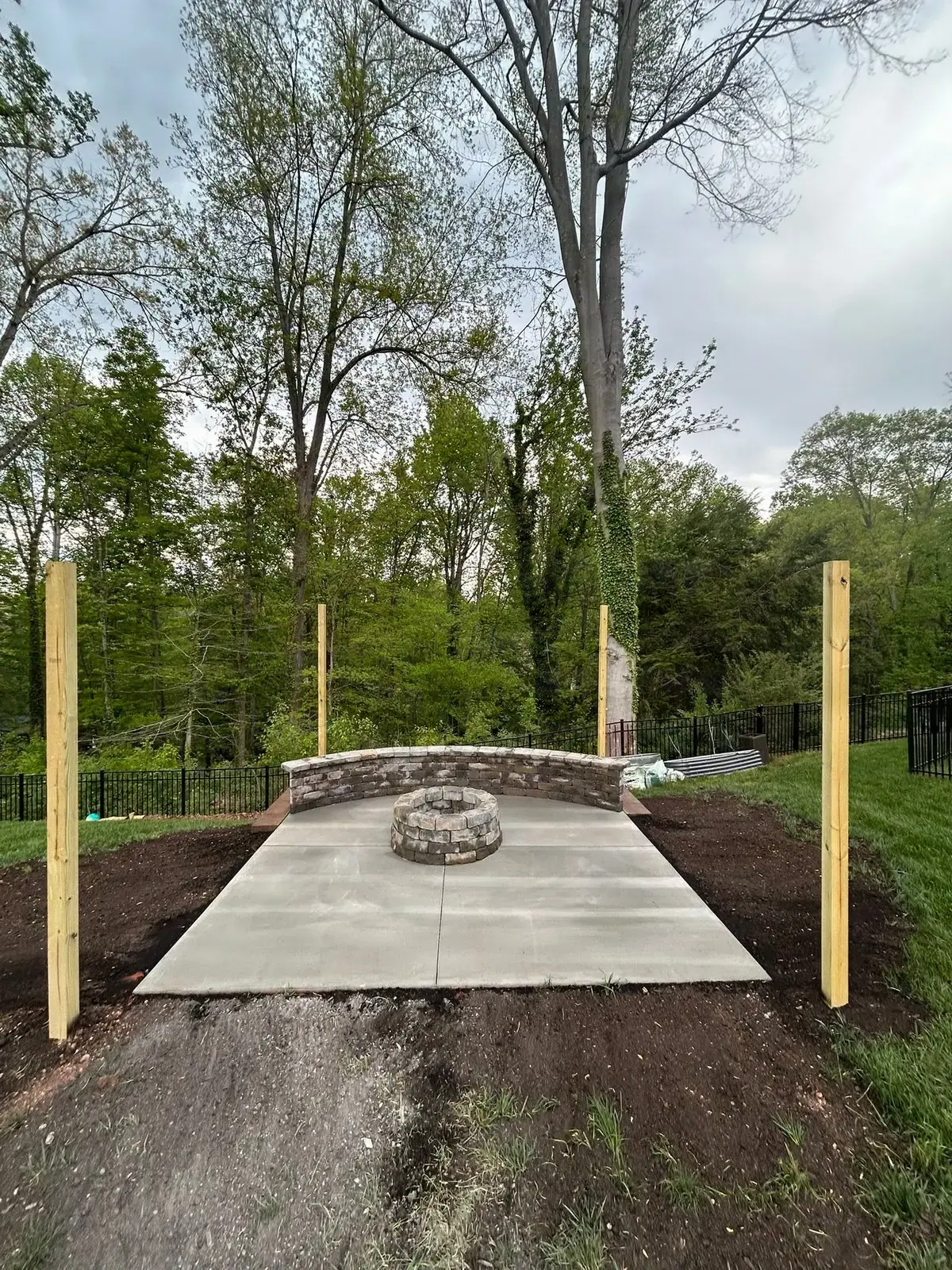
Most of what we pour sits at ground level around a house:
- Patios. A slab off the back door or out in the yard, sized for a table, a grill, or a fire pit with a seat wall around it.
- Pads. A flat slab for a shed, trash cans or an outdoor unit, on the same compacted base as a patio.
- Porches and stoops. A concrete porch floor or a landing at a door. Where a porch or poured steps meet the house, they need footers under their edges that reach below the frost line, or they settle and pull away from the wall.
- Steps. Poured concrete steps, or stone steps set into a slope between a patio and the yard.
The hardscape is the built part of the yard around the slab: the walls, steps and stone that tie a patio to the ground. We build those in block, stone and concrete, so one estimate can cover the slab and everything that meets it.
How We Pour a Concrete Patio, Step by Step
Every patio goes through the same steps, and the early ones decide how it ages:
- Lay out and grade. Stakes and string mark the edges, and the finished height is set so the slab falls away from the house. The common guidance is about 1/8 to 1/4 inch of fall for each foot: enough to shed water, too little to notice under a chair.
- Dig out and compact. Topsoil and roots come out, because they rot and settle. Then crushed gravel, often about 4 inches of it, is spread and compacted with a plate compactor.
- Set the forms. Boards staked on edge hold the concrete to its shape, set to the slope from the string.
- Rebar or wire mesh. The steel sits on small supports called chairs so it ends up in the middle of the slab. Steel does not stop concrete from cracking: it holds the pieces tight and level if a crack opens.
- Pour, screed, float and edge. A straight board pulled across the forms strikes the concrete off to height, a bull float brings fine paste to the top, and an edging tool rounds the borders so they don't chip.
- Broom finish. Fine ridges across the surface that grip a wet shoe.
- Cut control joints. Tooled into the wet concrete or sawn early the next day.
- Cure. The slab is kept damp or covered so it dries slowly, and nothing heavy goes on it for the days the mix calls for.
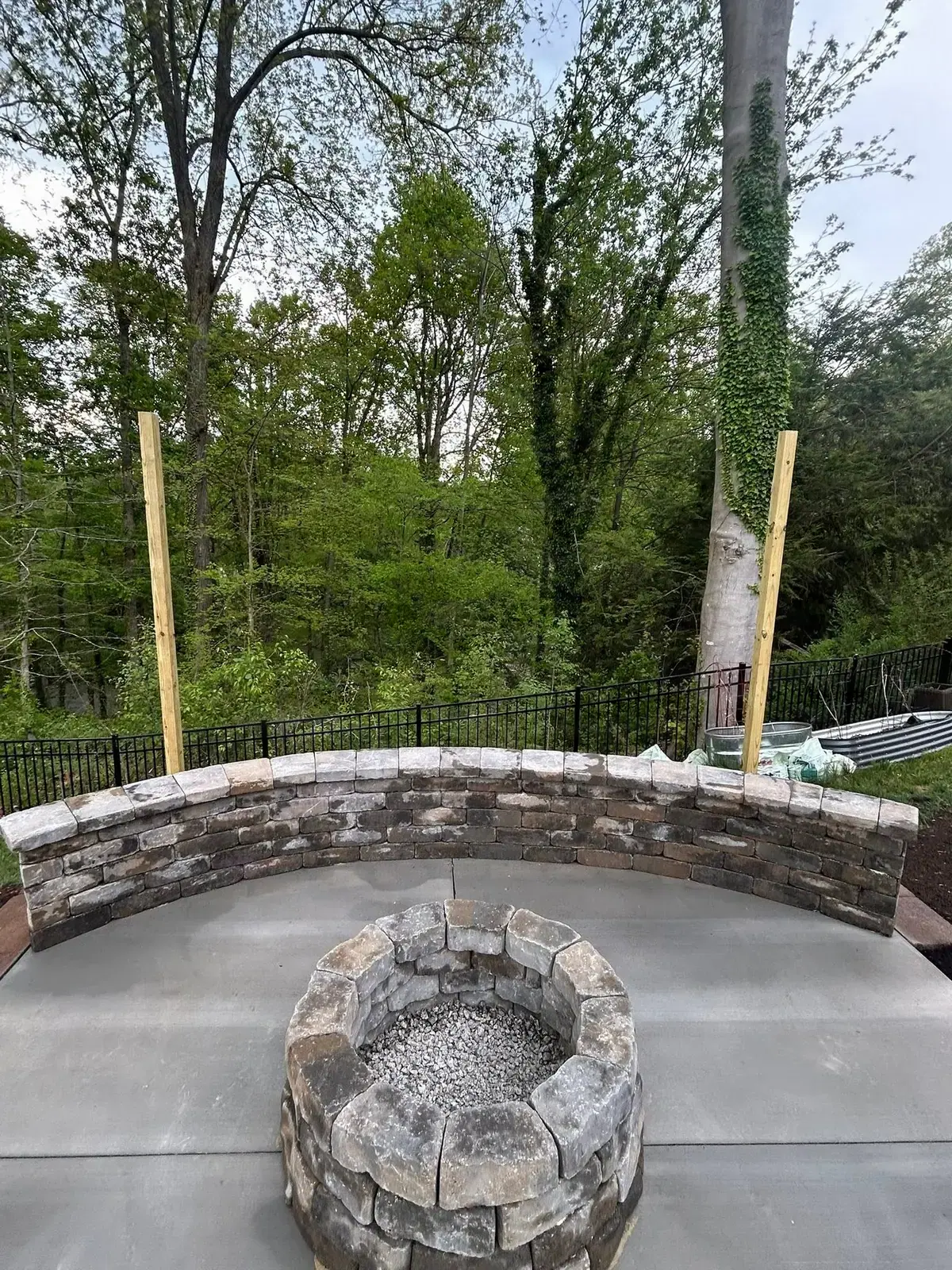
One patio in March 2026 went like this: we prepped and formed it one evening, came back a couple of days later to pour, and left it to cure, with a fire pit and a seat wall to go on it next. That part has its own page: outdoor fireplaces and fire pits.
Why Concrete Cracks, and What Our Winters Do to a Slab
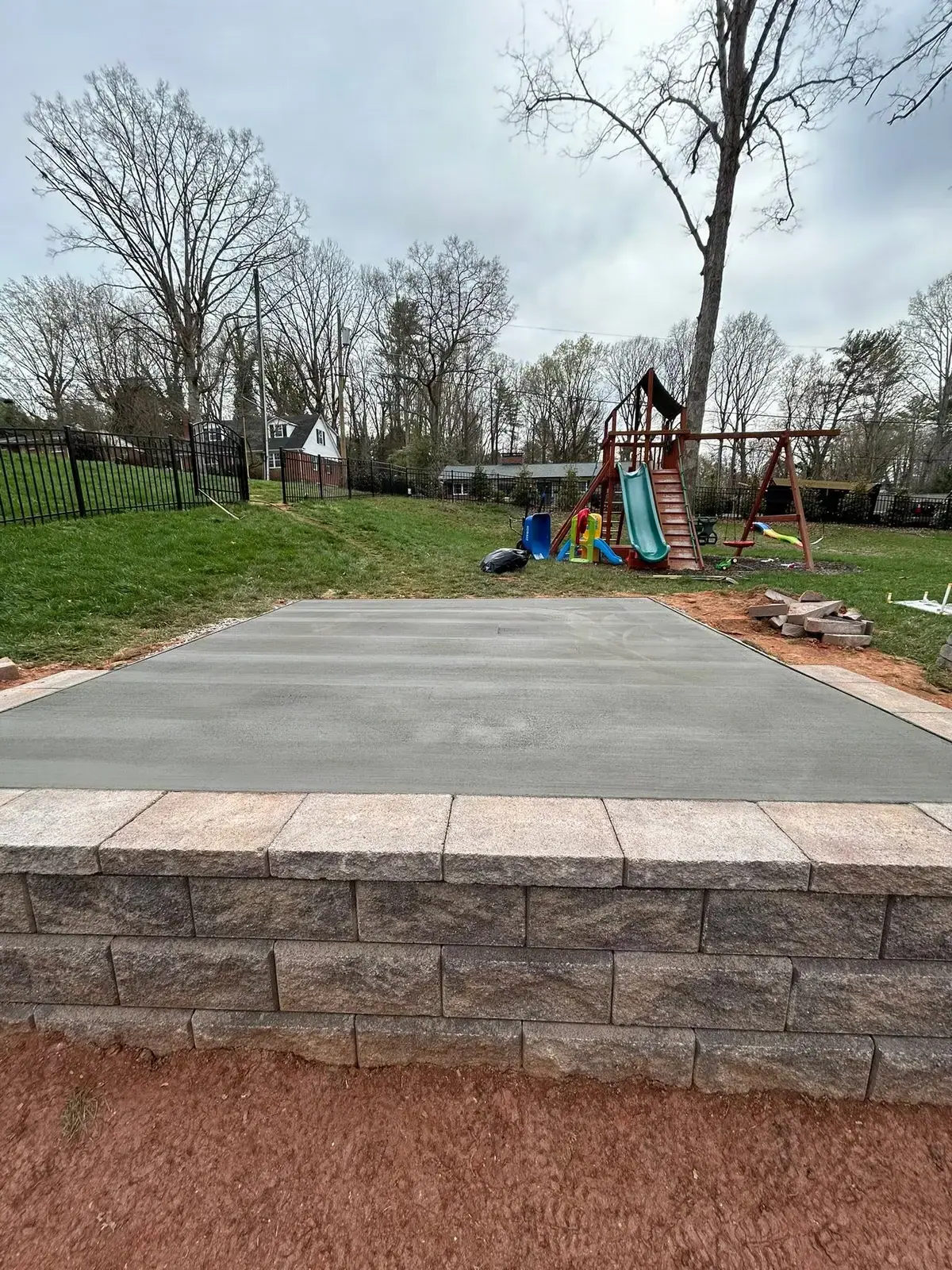
All concrete shrinks as the water in it dries out, and a slab that shrinks pulls against itself until it cracks. Control joints decide where it happens. A groove cut about a quarter of the way through the slab makes a weak line, so the crack forms at the bottom of the groove, straight and hidden, instead of wandering across the middle. The common guidance spaces joints, in feet, at two to three times the slab's thickness in inches: about every 8 to 12 feet on a 4-inch slab, in squares rather than long strips.
The weather here works on every slab. NOAA's 1991-2020 normals for Morganton count 90.8 days a year with a low at or below freezing, and many of those nights are followed by days above it. Water in a crack or in the soil under a slab freezes, swells and thaws again, lifting and dropping the concrete a little each time. That is why the base is compacted crushed gravel: water drains down through it instead of sitting under the slab.
The same normals give 51.53 inches of rain and melted snow a year. A patio poured flat, or tipped toward the house, sends that water to the foundation wall or leaves it standing where it can freeze. The fall we set at layout carries it off the far edge instead.
Pouring in cool weather
Concrete hardens by a chemical reaction, not by drying out, and cold slows that reaction down. Below about 50°F a slab gains strength slowly, and concrete that freezes in its first day or two can lose strength and surface for good. So in the cooler months the nights after a pour matter as much as the day of it: no pour goes on frozen ground, and a fresh slab is covered with insulated blankets when the nights turn cold. Either way, concrete keeps gaining strength for about 28 days.
Seat Walls, Stone Steps and Hardscapes
A patio on a slope usually needs more than a slab:
- Seat walls. A low wall at about chair height, commonly 18 to 20 inches, around a fire pit or along a patio's edge. It is built in block and faced or capped with stone or concrete, on its own footer or compacted base so it stays plumb as the ground moves.
- Stone steps. Steps set into a bank between two levels, each on a compacted base, each tread pitched a little forward so rain runs off instead of pooling. Every riser is kept the same height, because the one odd step is the one people trip on.
Where a patio is cut into a hill or built up on its low side, the soil at its edge needs a retaining wall with drainage stone behind it, built before the slab so the patio's base sits on stable ground.
What Decides the Cost of a Concrete Patio or Porch
On a concrete patio, a porch or a hardscaped backyard, the site decides much of the price, not just the concrete:
- Size and thickness. The square feet, and whether the slab is thicker for heavier loads.
- Grading and base. How much soil comes out, how much gravel goes in, and how steep the ground is.
- Steel. Rebar or wire mesh.
- Porches and steps. Footers, forms and the number of steps.
- Access. Whether the concrete truck can back up to the forms, or the concrete has to be wheeled or pumped in.
- Extras. Seat walls, stone steps, or an old slab to break out and haul off first.
We pour patios and build hardscapes from Morganton out to Glen Alpine in the west and Hickory in the east. Call or text (828) 390-8226, or send photos of the spot through the contact form, for a free estimate.
Planning a Patio or a Porch?
Call (828) 390-8226 for a free estimate.
Photos From Our Jobs
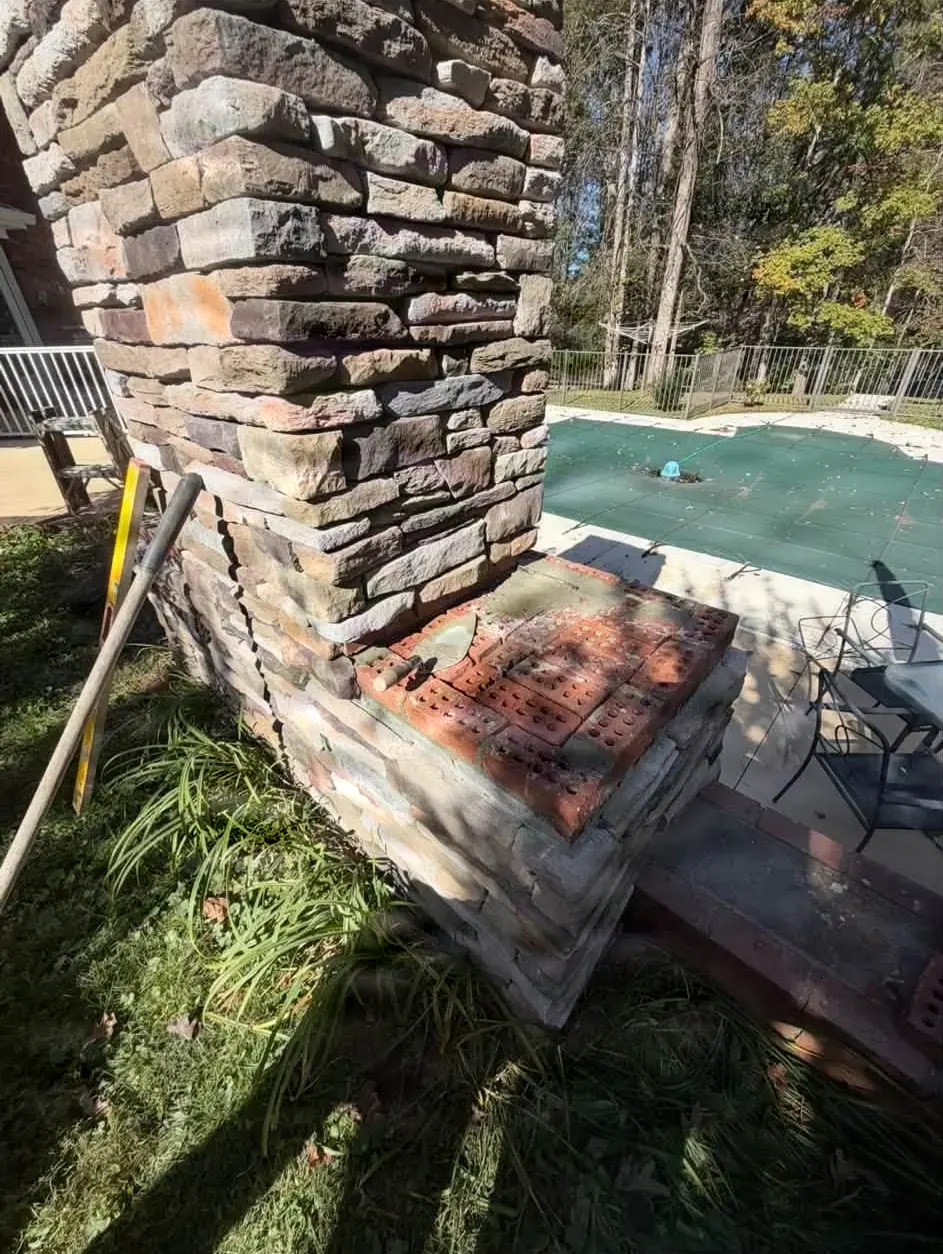
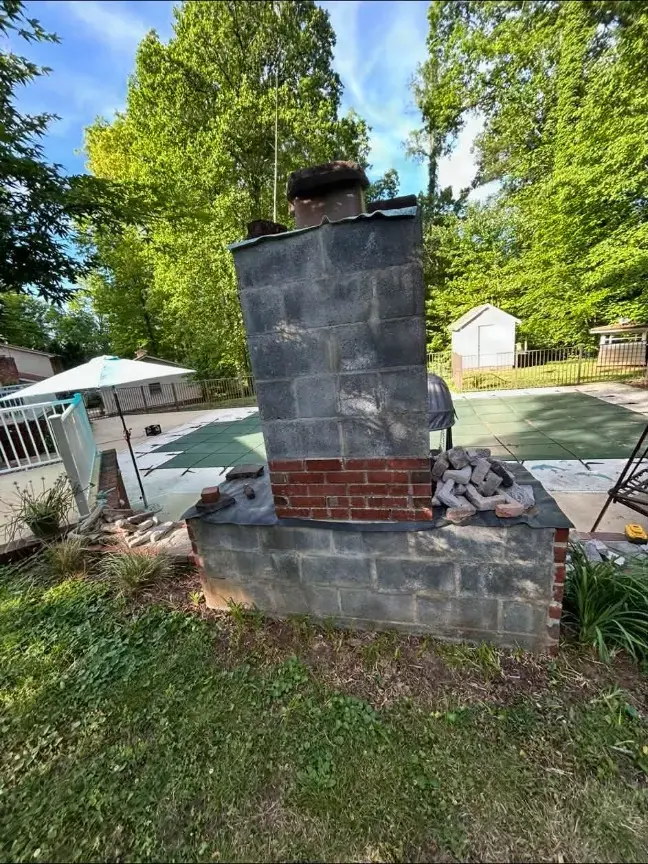
Every photo here is from one of our own jobs. Tap one to see it bigger.


Questions We Hear a Lot

-
It depends on the slab: its size and thickness, how much grading and gravel base the ground needs, rebar or wire mesh, any steps, how close the concrete truck can get and the finish. A porch adds footers at its edges, and an old slab to break out adds to either. Send us photos or call (828) 390-8226, and we'll give you a free estimate.
-
The number of steps and how steep the bank is decide most of it, then the stone itself and the base each step sits on. Steps that tie into a patio or a wall take more fitting than a run on open ground. Call or text (828) 390-8226 for a free estimate.
-
All concrete shrinks as it dries, so nearly every slab cracks somewhere. Control joints cut about a quarter of the way through decide where, so the crack runs hidden at the bottom of a groove. A compacted gravel base and a slope away from the house keep water from freezing under the slab and adding cracks of its own.
-
Most mixes take foot traffic after a day or two, and furniture or a grill after about a week; the mix and the weather decide it. Concrete keeps gaining strength for about 28 days, and cold weather slows all of it down. For its first days, the slab is kept damp or covered while it cures.
-
Yes. We offer free estimates. Call (828) 390-8226, send us a message on Facebook or use the contact form.
-
We serve Morganton, NC and the surrounding areas. Recent jobs include Lake James, Lake Rhodhiss, Valdese and Marion. Call (828) 390-8226 to check your location.
-
- Service Area Morganton, NC & surrounding areas:
Valdese, Marion, Lake James & Lake Rhodhiss - Free Estimates Call, text or message usMorganton, NC & nearby
- Find Us Online


